
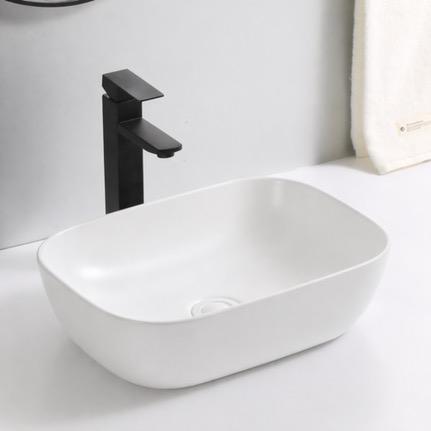
Albocàsser basin
From 36,30 €Countertop ceramic basin, rectangular with soft edges.
Bathroom · Basins
Bathroom · Basins
Glazed ceramic basins to sit on a countertop, in a range that combines soft-edged rectangular shapes, round fluted pieces and models in white, grey and black marble effect with gold veining and travertine. Finishes in gloss white and matt black add a design touch to the bathroom, alongside vanity-top basins available in widths of 60, 80, 100 and 120 cm. Per-unit prices excl. VAT, with volume tiers for professionals and developers. Request a quote and we will help you choose.
8 models
Countertop ceramic basin, rectangular with soft edges.
Bathroom · Basins
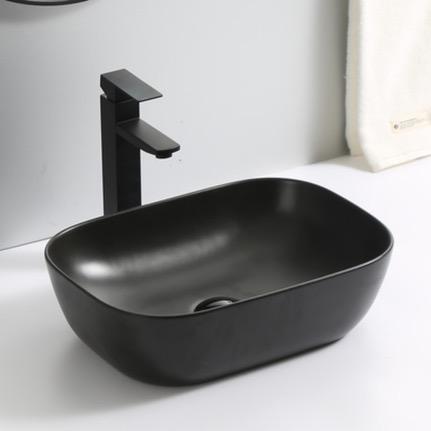
Countertop basin in matt black, rectangular.
Bathroom · Basins
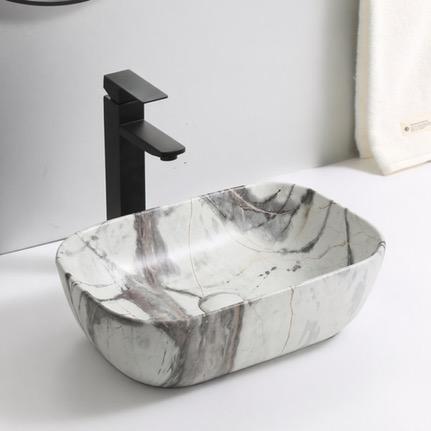
Countertop basin with veined white marble effect.
Bathroom · Basins
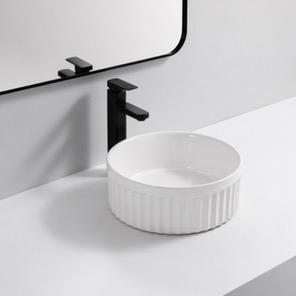
Round fluted white countertop basin.
Bathroom · Basins
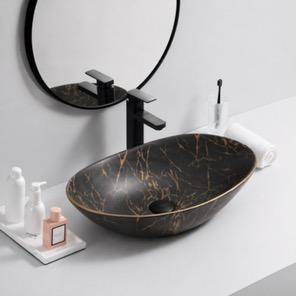
Oval basin with black marble effect and gold veins.
Bathroom · Basins
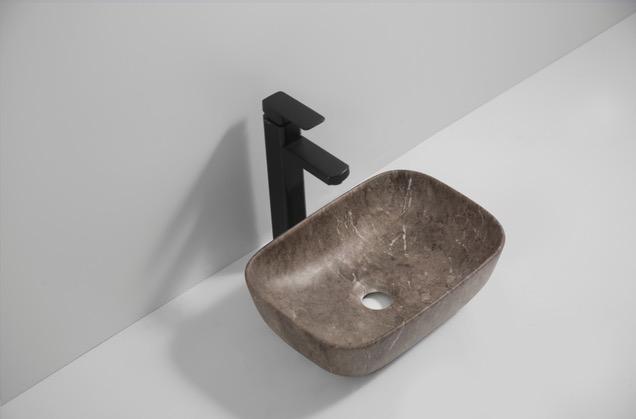
Countertop basin with grey marble effect.
Bathroom · Basins
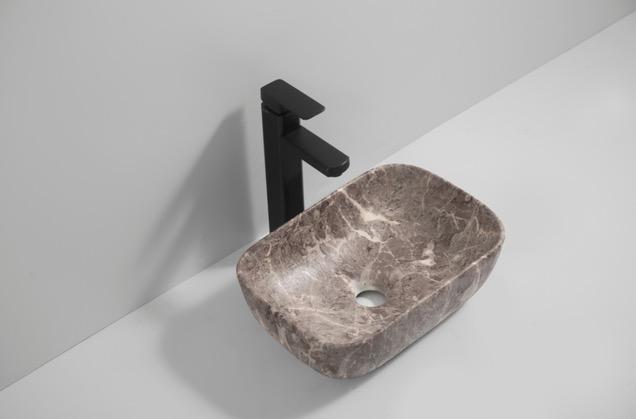
Countertop basin with warm travertine effect.
Bathroom · Basins
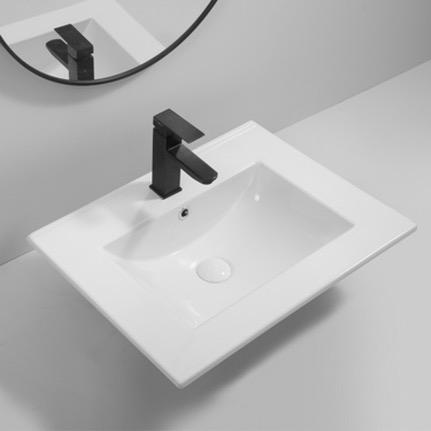
Ceramic basin for vanity-unit tops, several sizes.
Bathroom · Basins
The countertop basin changed how bathrooms are designed: the piece is no longer built in and becomes the star object, sitting on a unit or on a porcelain worktop. That brings aesthetic freedom, but introduces a variable people frequently forget: the final height. A countertop basin adds its own height to that of the unit, so if the assembly exceeds 90-95 centimetres it becomes awkward to use and to clean. The rule of thumb is to subtract the basin height from your intended working height and order the unit accordingly.
The second, linked decision is the tap. A tall countertop basin needs a high-spout or a wall-mounted tap; with a standard mixer the water falls too close to the rim and splashes. If the tap is going on the wall, the connection must be set out before tiling, which makes it a construction decision that allows no late changes. That is why basin and tap should be settled together, not in two separate purchases.
On materials, glazed ceramic remains the most balanced option: a non-porous vitrified surface, easy to clean and colour-stable over the years. Round and oval shapes soften hard-lined bathrooms and are more comfortable to clean inside; rectangular ones make better use of narrow worktops and suit minimalist compositions. For cloakrooms and small WCs there are reduced sizes that resolve handwashing in under 40 centimetres of depth.
Always check two details before confirming the order: whether the piece has an overflow — it determines the waste valve you need — and whether the waste sits centred relative to the unit's trap. A basin with an off-centre waste over a drawer unit may force you to cut the drawer, something solved in five minutes at design stage and in a whole afternoon if discovered during installation.
Finally, think about the unit underneath. A basin with a centred waste sits happily over a drawer unit only if the trap is offset or a shallow bottle trap is used; otherwise the top drawer has to be cut around it. Checking the waste position against the chosen unit takes a minute at design stage and saves a difficult afternoon during installation.
Need help choosing?
Free, no-obligation quote tailored to your project.